Mercedes Pay
Daimler had three separate apps, two major ecosystems, and no single thread connecting a Mercedes owner’s digital life to their car. Mercedes Pay was built to be that thread - a new payment card and application designed to unify DMO and MBC into one seamless customer touchpoint, turning a routine transaction into Daimler’s most direct new channel for brand engagement, behavioral data, and cross-ecosystem commerce.
Services
UX/UI Design · Design Systems · Product Strategy
Employer
Daimler

Daimler’s digital ecosystem had grown wide before it had grown coherent. A Mercedes owner was typically pointed toward three separate applications - Mercedes me, Mercedes Shop, Mercedes Services - each with its own features, its own logic, its own reason to open it. None of them talked to each other in a way the customer could feel, and none of them were built to carry a payment relationship. Daimler wanted to change that: use the rise of digital payment as the moment to connect the DMO and MBC ecosystems into one seamless interaction portal.
Mercedes Pay had to do three things at once: establish a genuinely new channel for customer interaction and brand engagement, capture transactional and behavioral data across every touchpoint a customer used, and link outward into other brand ecosystems entirely - Accor, Marriott, and beyond - for a more seamless experience than any single Daimler app could offer alone.
Before any of that could be designed, the ecosystem itself had to be understood on its own terms - three overlapping apps, each with functionality Mercedes owners were already relying on, that a new application would now need to sit at the center of without disrupting.
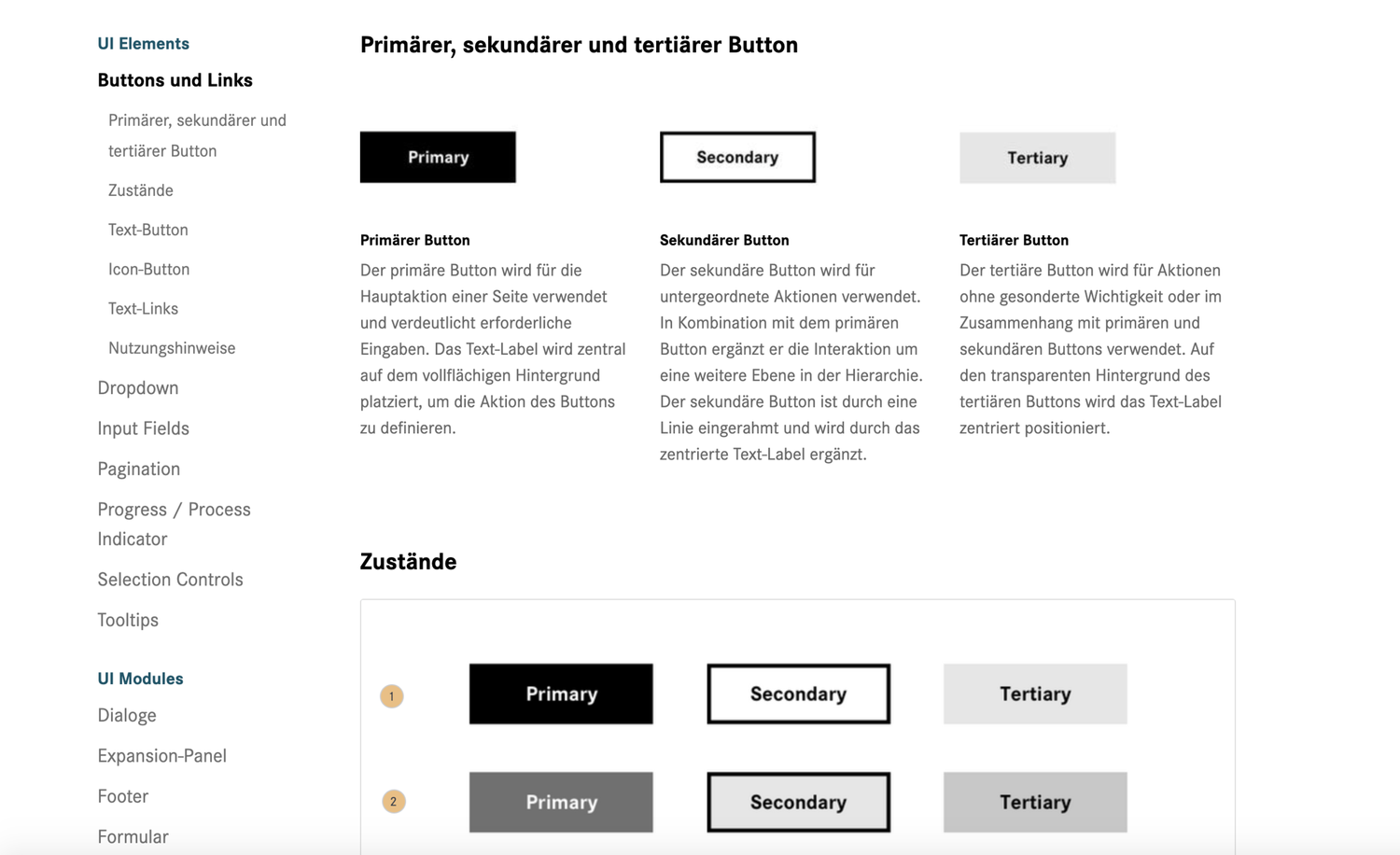
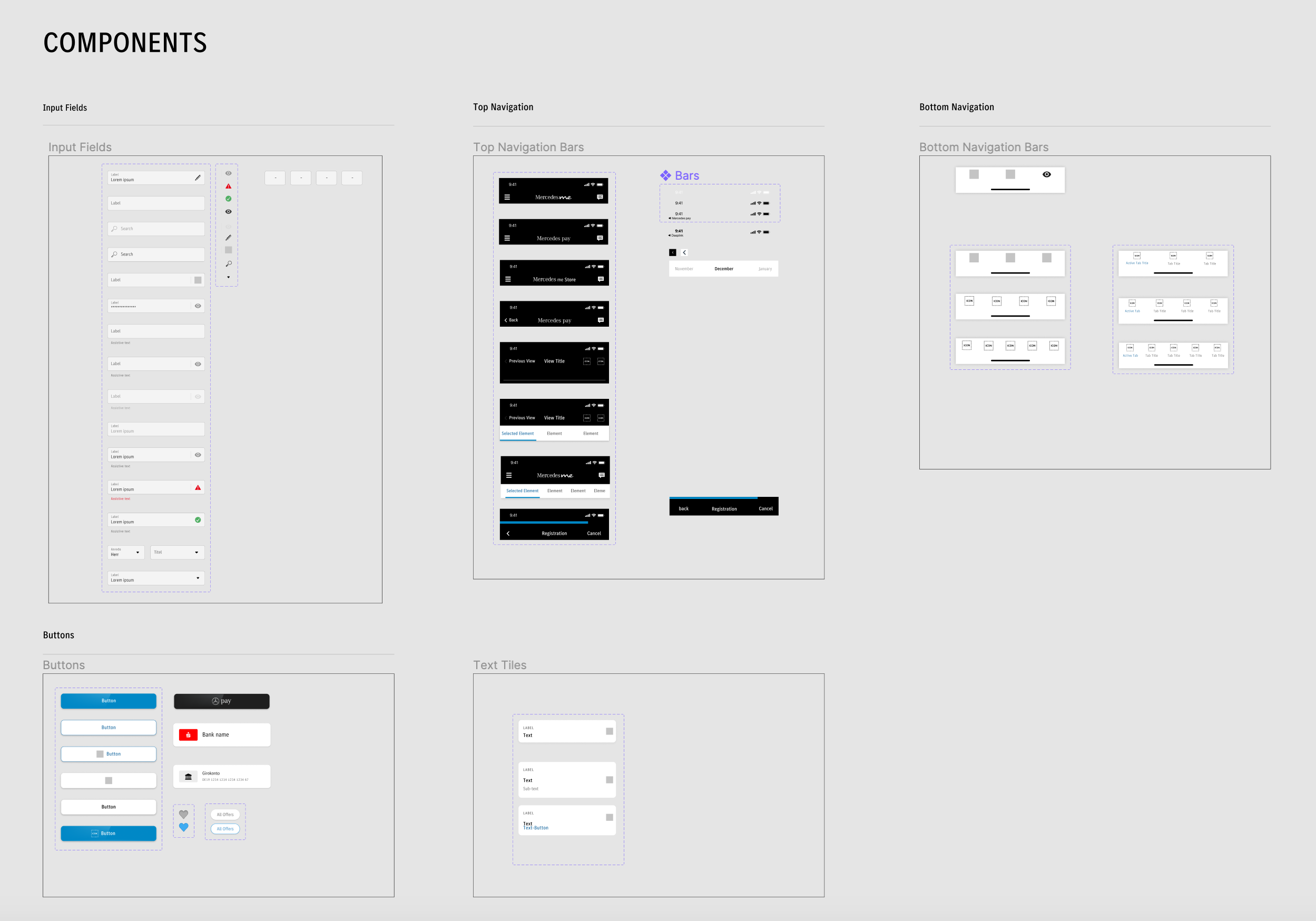
We started by mapping Daimler’s existing world rather than designing around it blind - understanding what Mercedes me, Mercedes Shop, and Mercedes Services each actually did, so that Mercedes Pay could add real value instead of duplicating what already worked. Daimler’s design system was equally non-negotiable: we studied their styleguide in full so that everything we built adhered to brand guidelines and UI specification from the first screen. Working remotely, we moved the entire process onto Figma for real-time collaboration - reworking the Sketch files and libraries the client had provided into a Figma-native system the whole team could build from together.
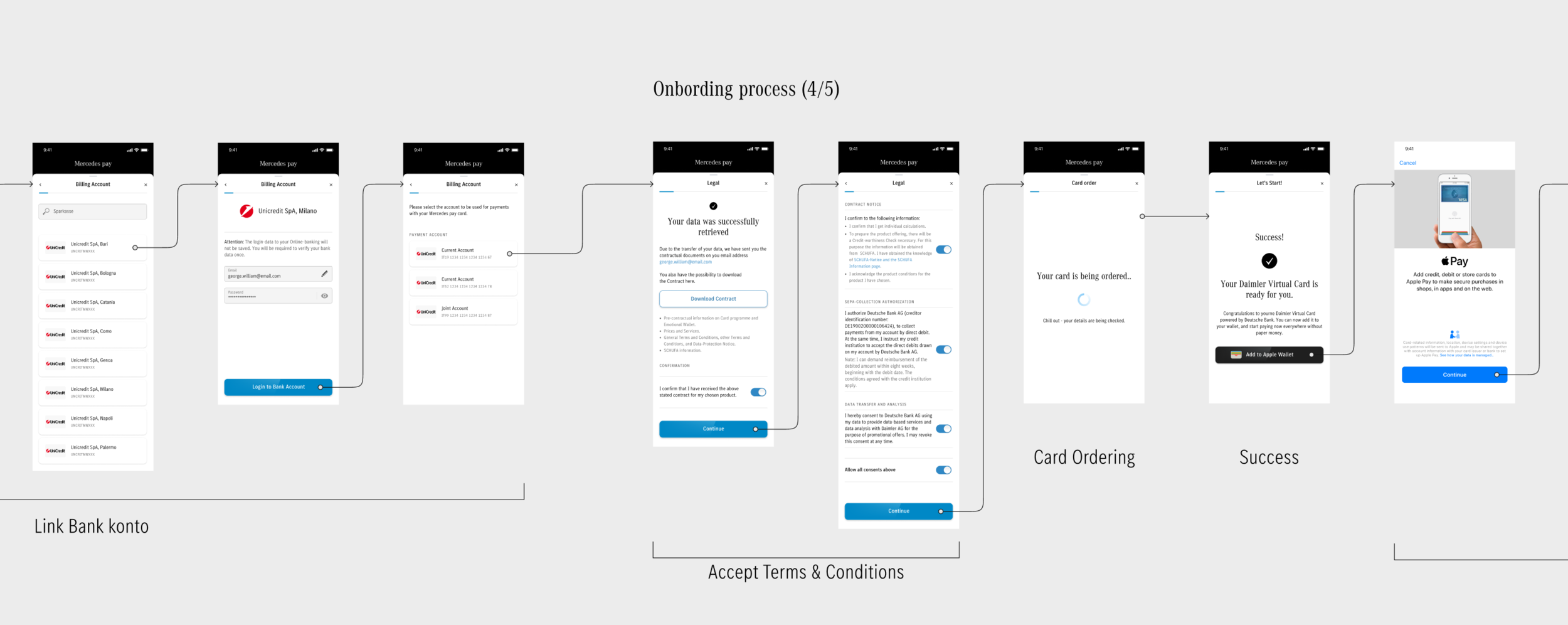
We broke that storyline into three connected journeys: onboarding, to convert Mercedes car buyers and renters into Mercedes Pay users; in-app purchase, to keep users engaged with offers and commerce across the Daimler ecosystem; and upsell, to move existing users toward their next car.
Onboarding meant going straight to the source. Through direct sessions with Mercedes sales centres, we mapped the real process of buying or renting a car and found the natural moment to introduce a Mercedes Pay sign-up inside it - then built in the Deutsche Bank SDK so every field required for mobile banking compliance was present from day one. For in-app commerce, conversations with white-label service providers and Daimler’s marketing department shaped an experience where a Mercedes Pay card gave users direct access to every available offer, across Daimler’s own ecosystems and third-party providers alike.
As the design evolved with every client conversation, keeping a growing design team aligned became its own challenge - so we built a mini styleguide inside Figma specifically to keep every designer’s output consistent, no matter which part of the application they were working on.
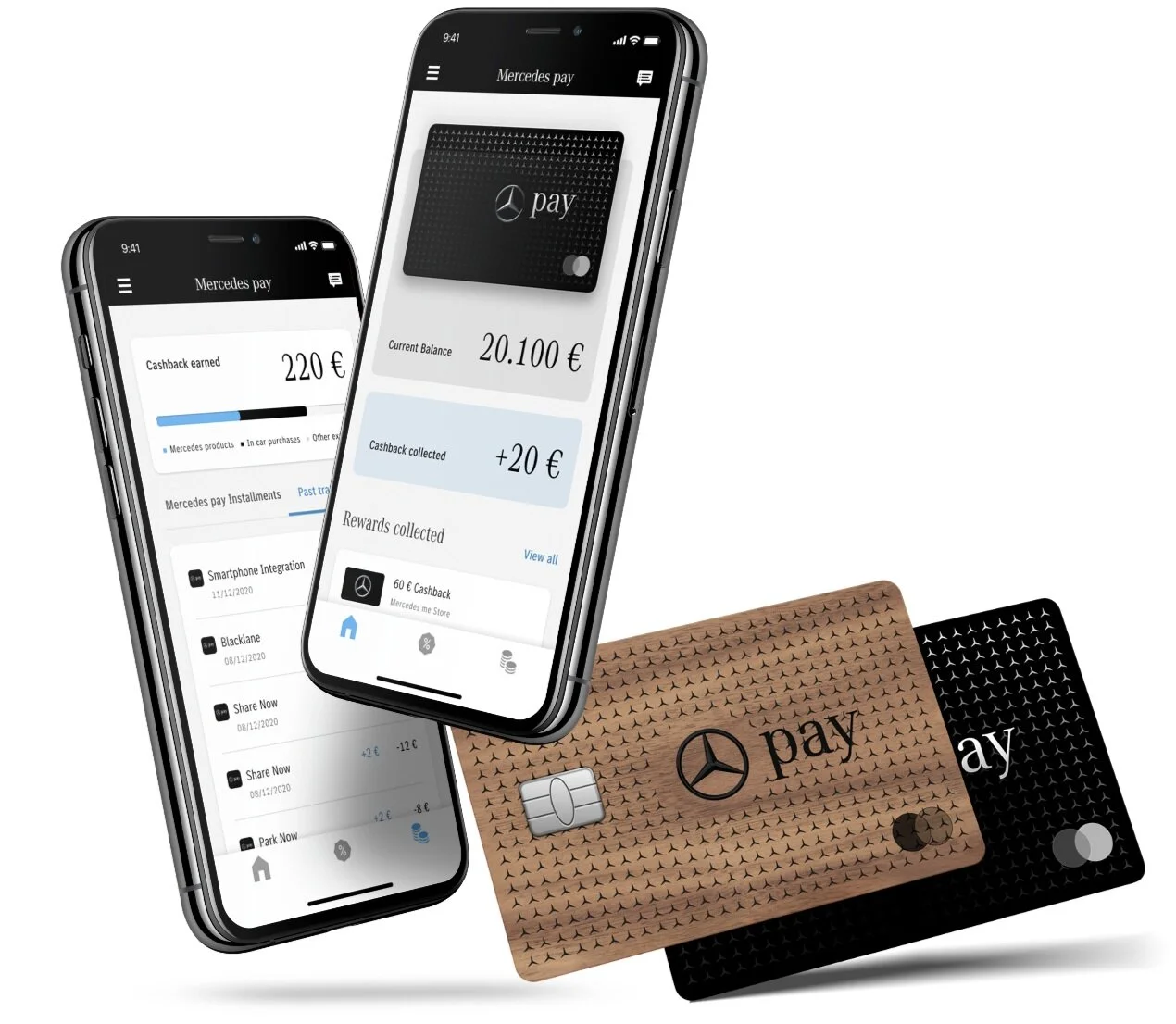
Mercedes Pay became a genuinely new customer touchpoint - one application where a customer could view every transaction on their card while also accessing DMO and MBC directly, with the app itself sitting at the center of an ecosystem that had never had a center before.
Customers weren’t just paying through Mercedes Pay - they were staying more engaged with the brand because of it.
By collapsing the complexity of DMO and MBC into a single unified payment layer, Mercedes Pay didn’t just simplify the customer’s experience - it created a new commercial channel. The unified layer was built to increase sales of products and services across both surfaces that mattered most to Daimler: on mobile, and in the car itself.