Allianz
A focused product design engagement across research, interaction patterns, and delivery-ready interface systems.
Services
UX Design · AI Design
Employer
Allianz
Commercial insurance isn't one journey, it's several, running in parallel, for people who never log into the same screen. A broker uploads risk data and tracks a submission. An underwriter assembles that same risk into a case, weighs it against loss history and third-party data, and produces a defensible pricing decision. A risk engineer feeds findings in from the field. A client's risk manager reads the outcome secondhand, relayed by the broker who's the only one actually in the portal. Layer in mid-corp accounts that expect e-commerce-grade speed and large-corp programs that span entities and countries and expect case-management-grade transparency instead, and
Twelve product teams. Three geographies. One design system that everyone was supposed to be building from, and no shared layer between "the system exists" and "the feature ships." Every product team interpreted the design system slightly differently inside their own scrum, the same recurring questions about spacing, button placement, table behavior, modal patterns negotiated independently, sprint after sprint, team after team.
That started with actually understanding the journey and not just the screen in front of a given team, but how mid-corp quoting, large-corp onboarding, and the dozen variations underneath them connected to one another across the vertical.
The deeper challenge sat underneath the surface-level inconsistency: a design system provides atoms, not journeys. Nobody had defined the framework rules for how those atoms assembled into real commercial flows, so every team was solving the same underlying problems independently, from scratch, every time.
Working inside the scrum environment meant design decisions had to hold up in the room, not just on a file, so I focused on driving those decisions where they actually got made, embedded with the teams rather than dictating from outside.
Every recurring UX question that surfaced in a sprint became an opportunity to raise it as a demand against the design system, and to document the pattern once, for every team, rather than resolving it locally and losing it the next time it came up.
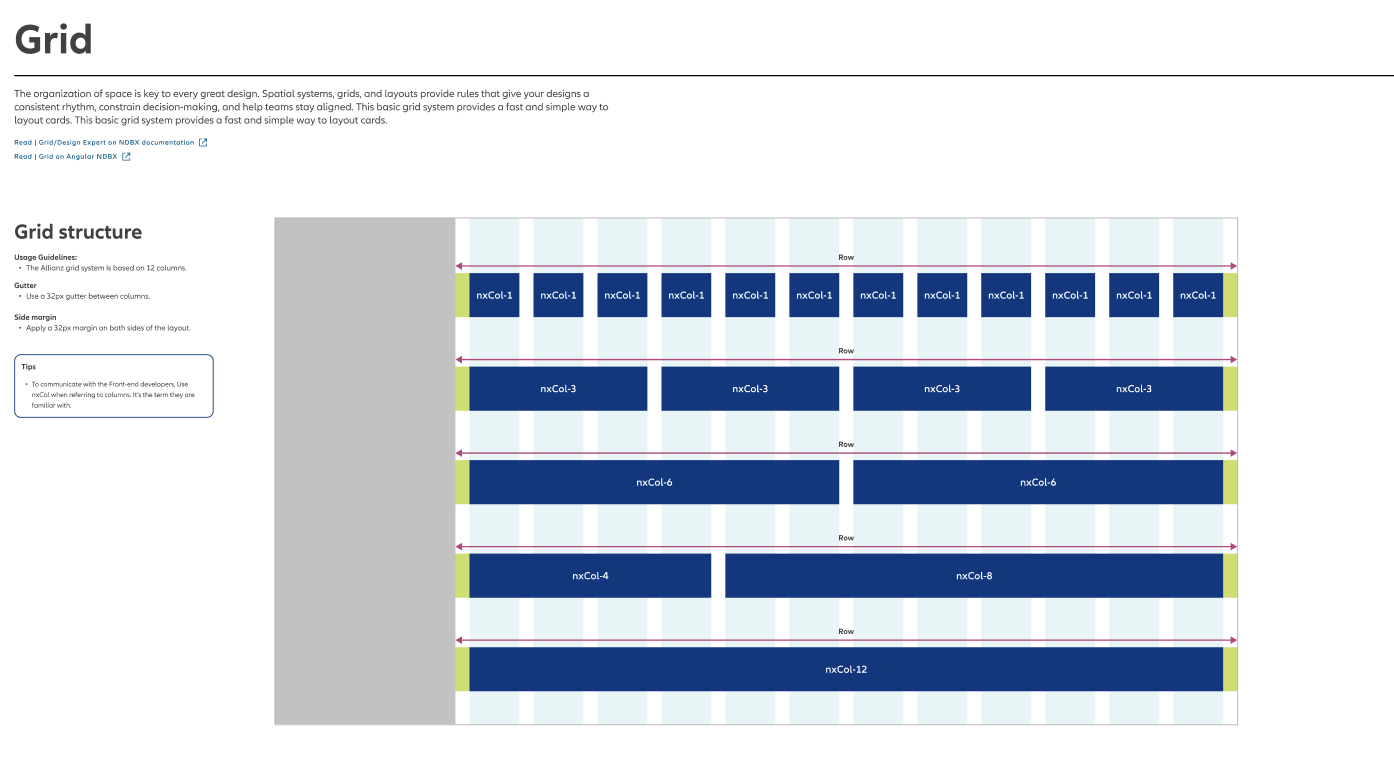
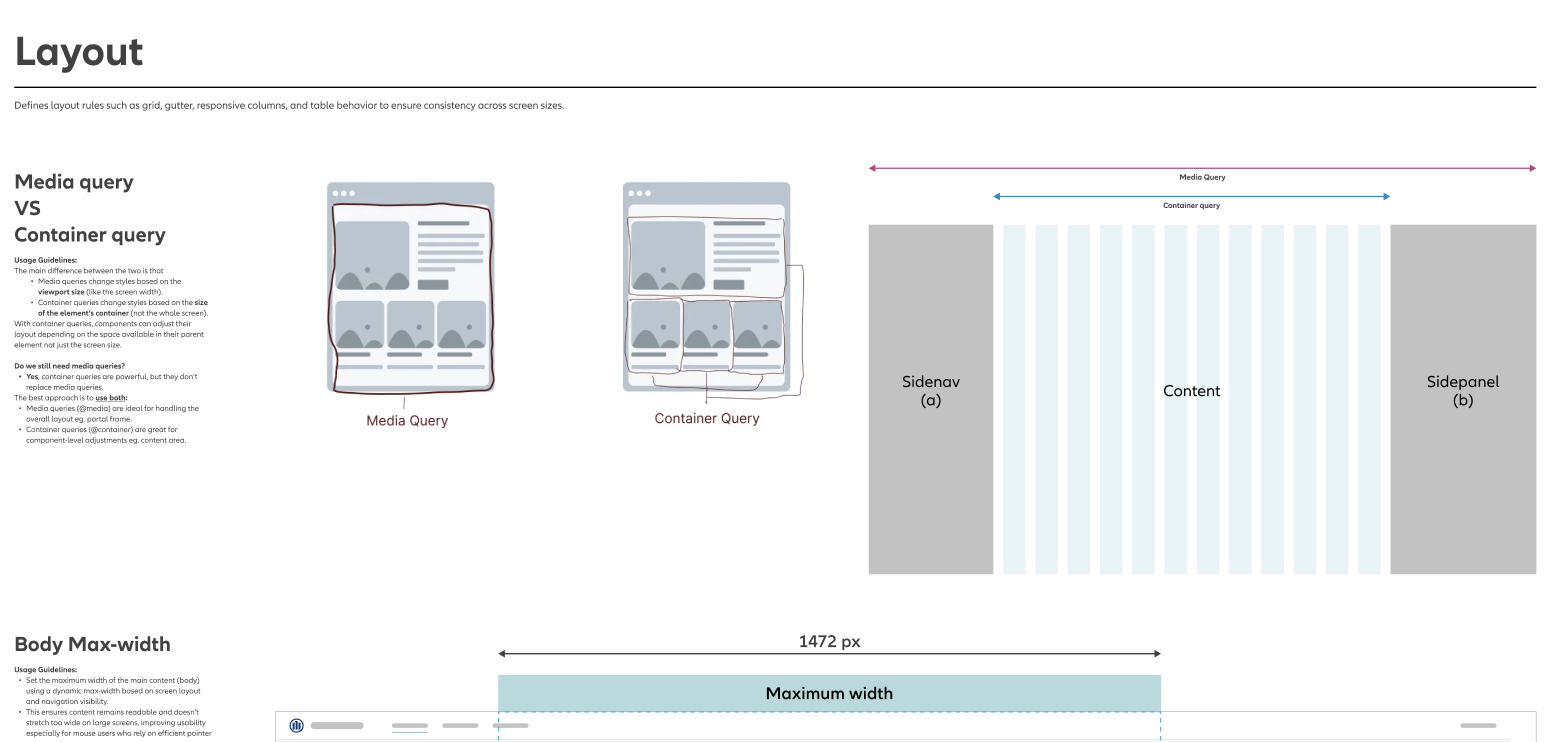
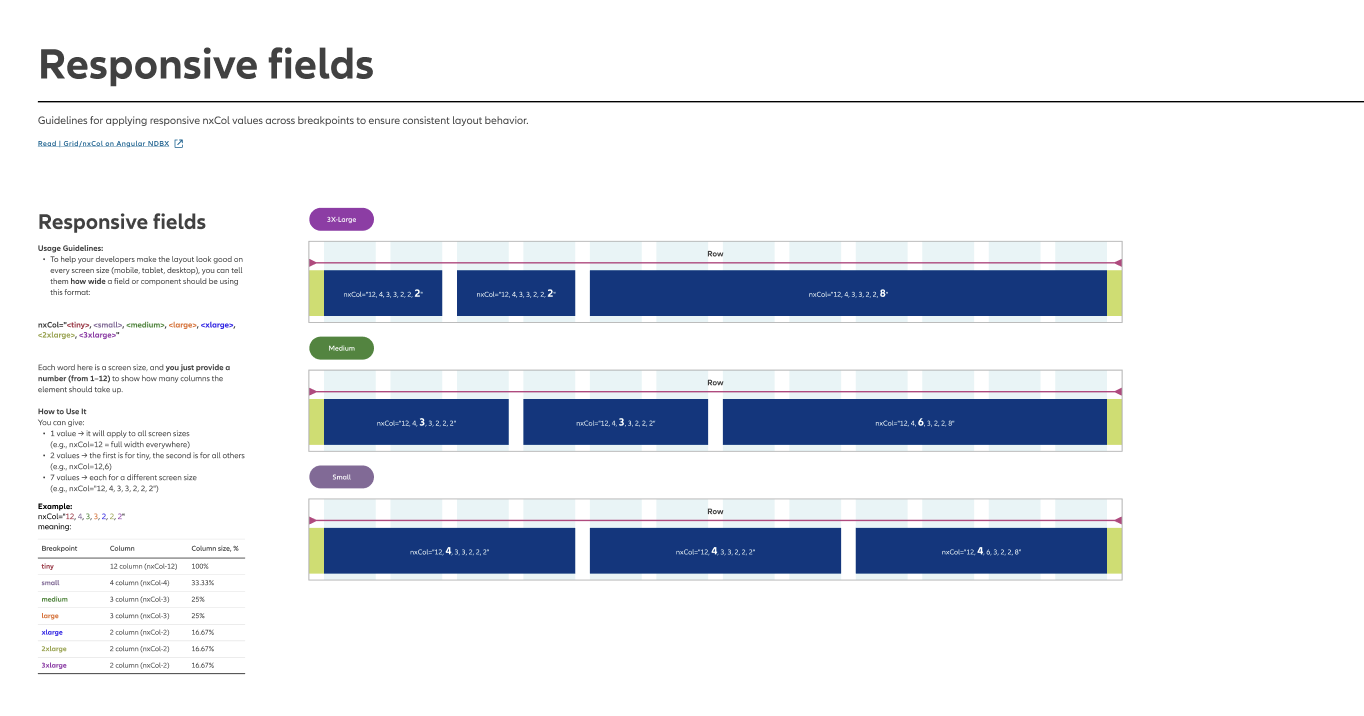
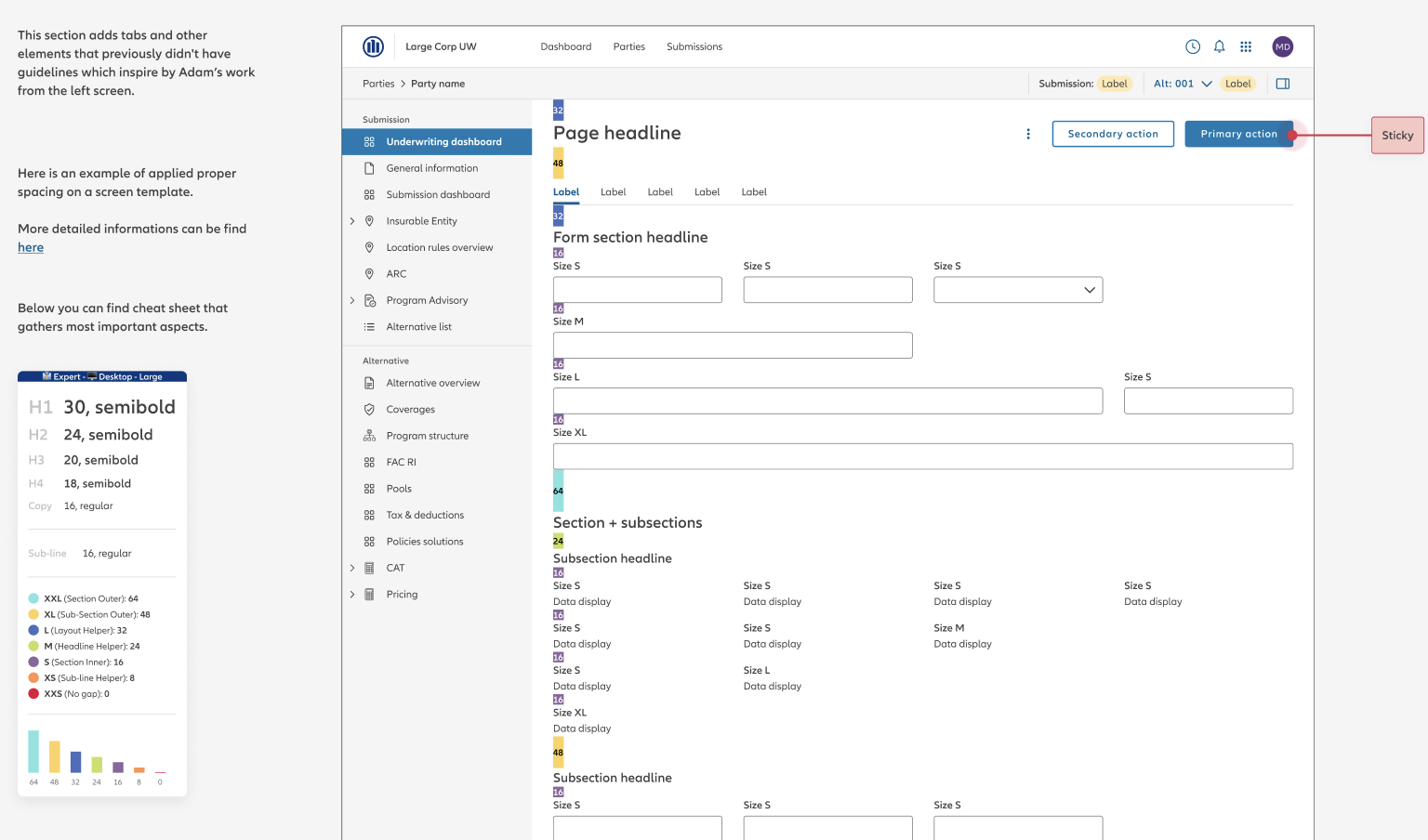
That discipline became the AGCS Cook Book, a harmonized pattern library layered on top of the design system. Where the design system defined components, the Cook Book defined the rules, navigation, spacing and component length, button placement across full-screen modals, content areas, tables and tabs, the "unsaved changes" pattern, forms, filters, notifications. Every recurring UX decision, documented once, referenced by every team.
The Cook Book did double duty. It harmonized twelve teams around one source of truth, and it became the intake layer for the design system itself, any team requesting a new component now filed the demand through the Cook Book, with the framework context already attached. I sat on the board evaluating those demands, tracking them against individual scrum priorities and the wider business strategy, so growth of the system stayed intentional rather than reactive.
The deeper value came from pushing patterns one step further, into templates. Pattern libraries solve consistency; they don't solve speed. So I championed a team to turn Cook Book patterns into full responsive page templates pre-assembled journeys stitched from components so that for a large corp or mid corp flow, designers weren't reconstructing a journey from atoms every time. They could drag, drop, and ship.
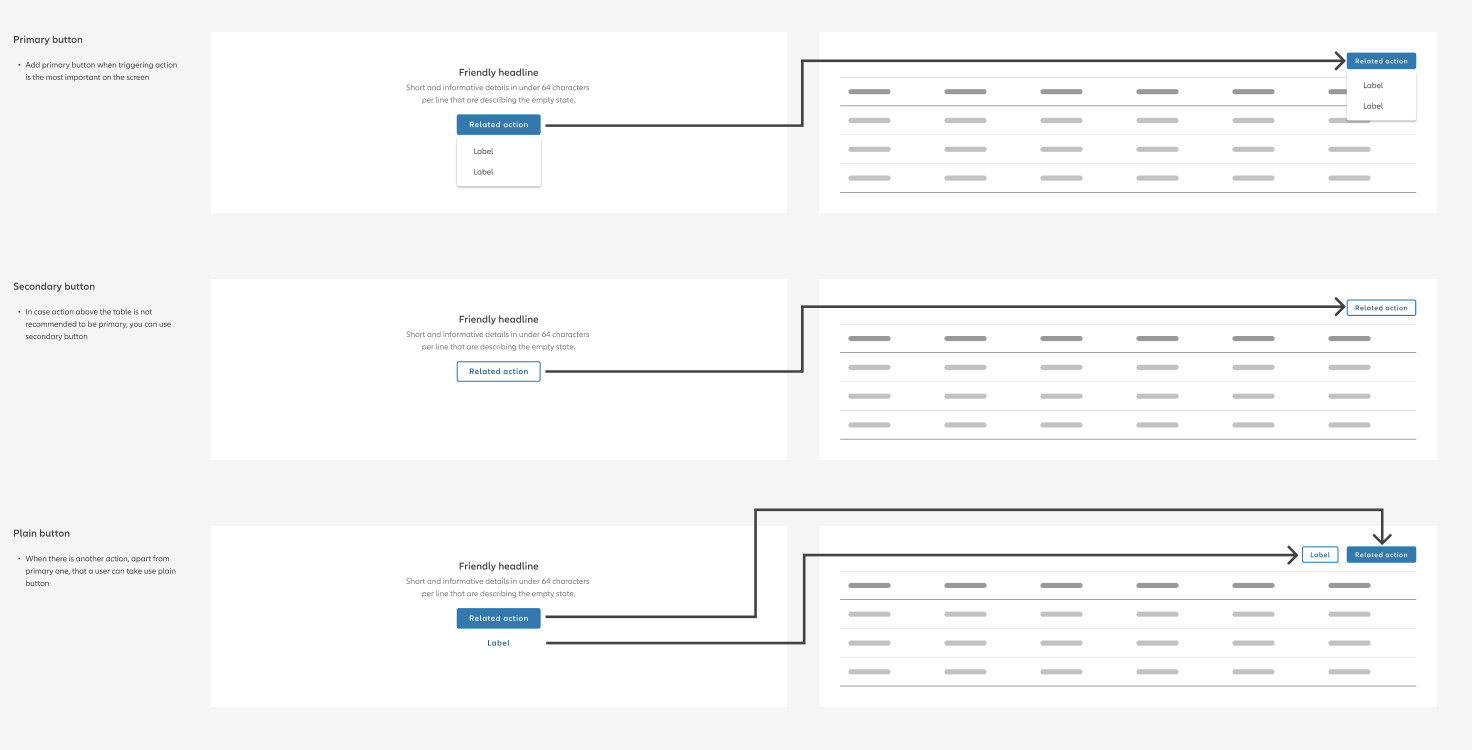
Design decisions stopped being re-argued team by team. Because those decisions were driven inside the scrum, in real time, they landed where they mattered and stayed made a question resolved for one team was a question resolved for twelve.
Three years and twelve product teams later, the fragmentation that used to cost every team its own interpretation of the design system was gone. In its place: a living pattern library with dedicated sections for accessibility and UX writing, layout and structure, UX patterns, data display, and feedback and messaging, actively maintained, still marked "ready for dev" on live components today.
The template work compounded the effect, and is where the deepest value sat. Journeys that once took a designer days to reconstruct component-by-component became drag-and-drop assemblies, freeing design capacity across the org to spend more time on the decisions that actually needed a human and less on rebuilding the same large corp flow for the ninth time.
What was manual drag-and-drop then is now a workflow AI can run natively. With the Cook Book's patterns properly structured as Figma components and variables, an AI design agent can take a described journey "assemble a large corp onboarding flow" and compose the template directly from the existing library, the same discipline the team built by hand now compressed into a single instruction.
The template initiative wasn't just a productivity win in its moment; it built the exact foundation clean, documented, reusable patterns, that this kind of AI-assisted assembly depends on.